Marine Survey
A survey platform built for the way superyachts actually get surveyed.
Multiple trades, multiple languages, a client who wants to see what you're seeing, and a defect list that refuses to sit still. The tool handles all of it, so the surveyor can get back to surveying.
The reality of a superyacht survey
A new 70m yacht arrives for her pre-purchase survey. The lead surveyor walks her stem to stern over three days, breaking the work up by area. Hull, machinery, interior, deck systems, tenders, the lot. By the end, the defect list runs to hundreds of items. Some are cosmetic. Some are structural. Some are a quiet note that a system will need attention before the vessel changes hands again.
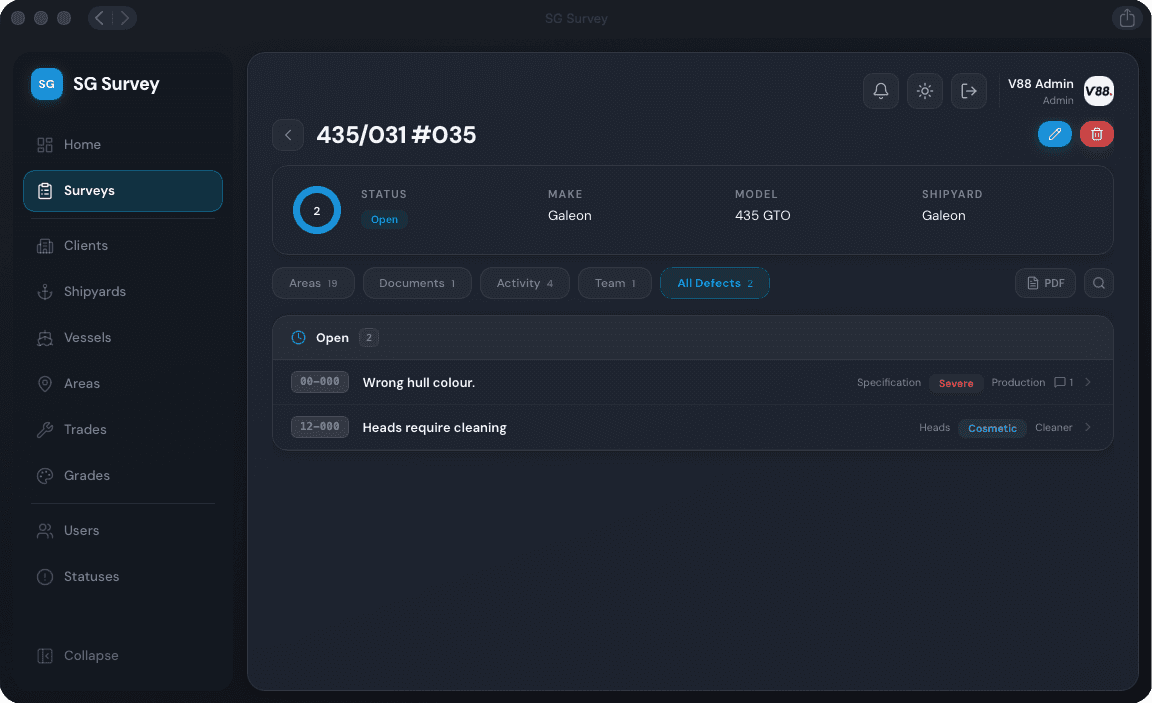
Every defect needs a grade. Every defect needs a trade. Every photo needs to be tied to the right item. The prospective owner wants a running view of what's been found. Their management team wants the same view, filtered differently. The yard needs to start scoping any remedial work before the ink is dry. The Dutch paint specialist, the Italian carpenter, and the French engineer all need their pieces of the list, in a form they can actually read.
And somewhere in the middle of all that, the surveyor is supposed to write a report.
A better way
Most survey firms are running this on a combination of a spreadsheet, a Dropbox, a WhatsApp group, and one very patient person keeping it all in their head. It works, mostly. Until it doesn't.
We built something much better with a forward-looking survey firm who wanted to innovate and grow. It's now a fully-dedicated platform that we provide to the sector.
How it works
The surveyor breaks the vessel into areas and walks each one in a logical order. Defects go in as they're found, graded and assigned to a trade, with photos attached on the spot. The owner, the buyer's team, and the management company can see what's being logged in near real time. Tradesmen receive their specific items, in their own language if needed, with the context and the evidence already there. Comments on individual defects keep the whole conversation in one place instead of scattered across inboxes and chat threads.
- Area by area survey structure, configured for the vessel
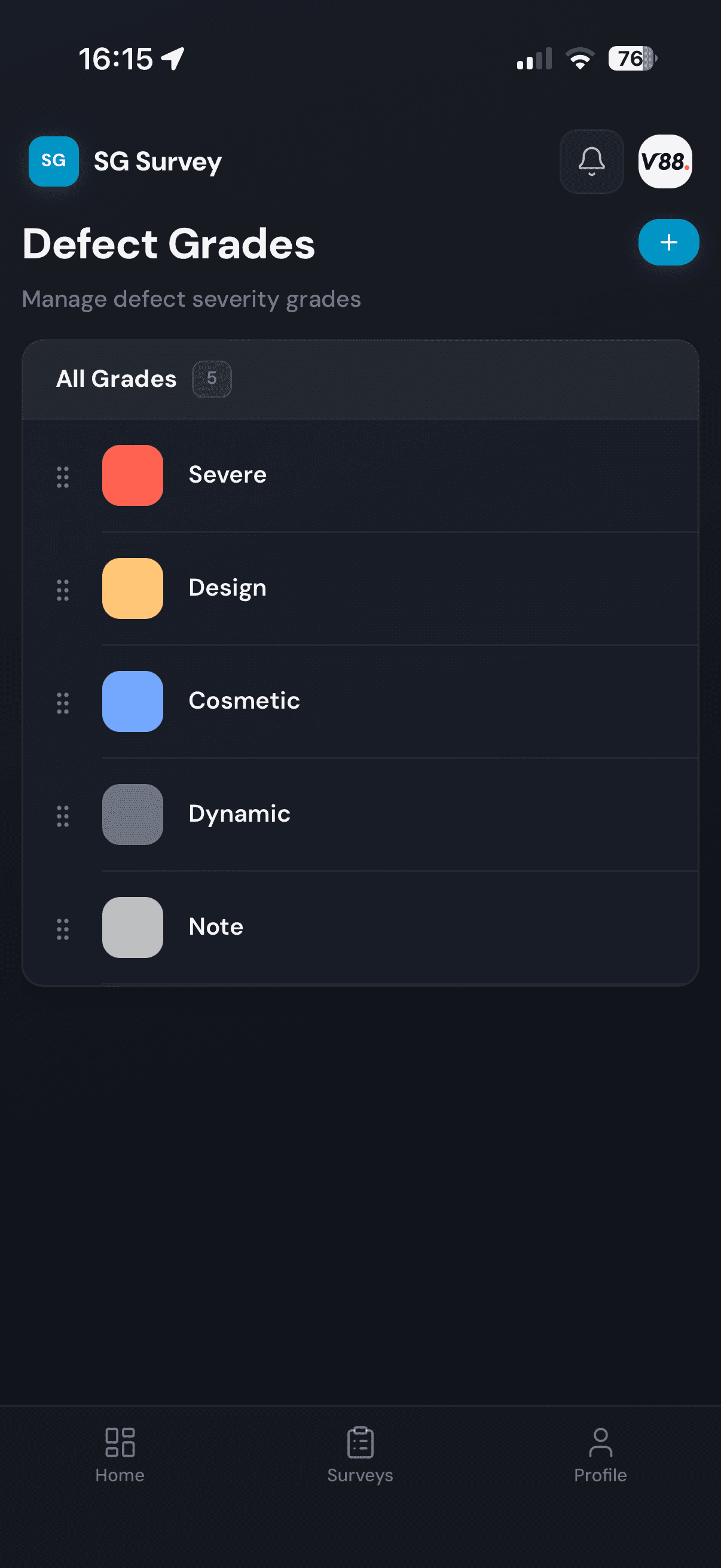
- Defect grading by severity and by trade
- Photo capture tied to each defect, on any device
- Trade assignment by item or by defect type
- Multi-language support for international yards and crews
- Live client visibility without the surveyor having to send anything
- Threaded comments on every defect for clean collaboration
It's the kind of tool a survey firm would build themselves if they had a development team sitting in the next room. But they don't and they shouldn't need to.
The outcome
Superyacht surveys have become more demanding every year. The vessels are more complex, the owners are more involved, the regulatory environment is tighter, and the refit windows are shorter. The system most firms use has not kept up.
This one has.